Starting an LLC in Texas can be a straightforward process if you know the right steps to follow. Whether you’re a first-time entrepreneur or an experienced business owner, this guide will walk you through how to start an LLC in Texas, making it simple and clear.
From choosing a name to filing your formation documents, we've got all the details you need to confidently form your Texas LLC.
Options for Forming an LLC in Texas
- Do-It-Yourself (DIY): Perfect for those who are comfortable with legal formalities and prefer a hands-on approach.
Go to the Texas Comptroller of Public Accounts website to check the LLC name availability and file your Certificate of Formation with the Texas Secretary of State. Then, visit the IRS’s website to get your EIN (Employer Identification Number). - Hiring a Legal Expert: Recommended for obtaining specialized legal advice, especially in complex business scenarios.
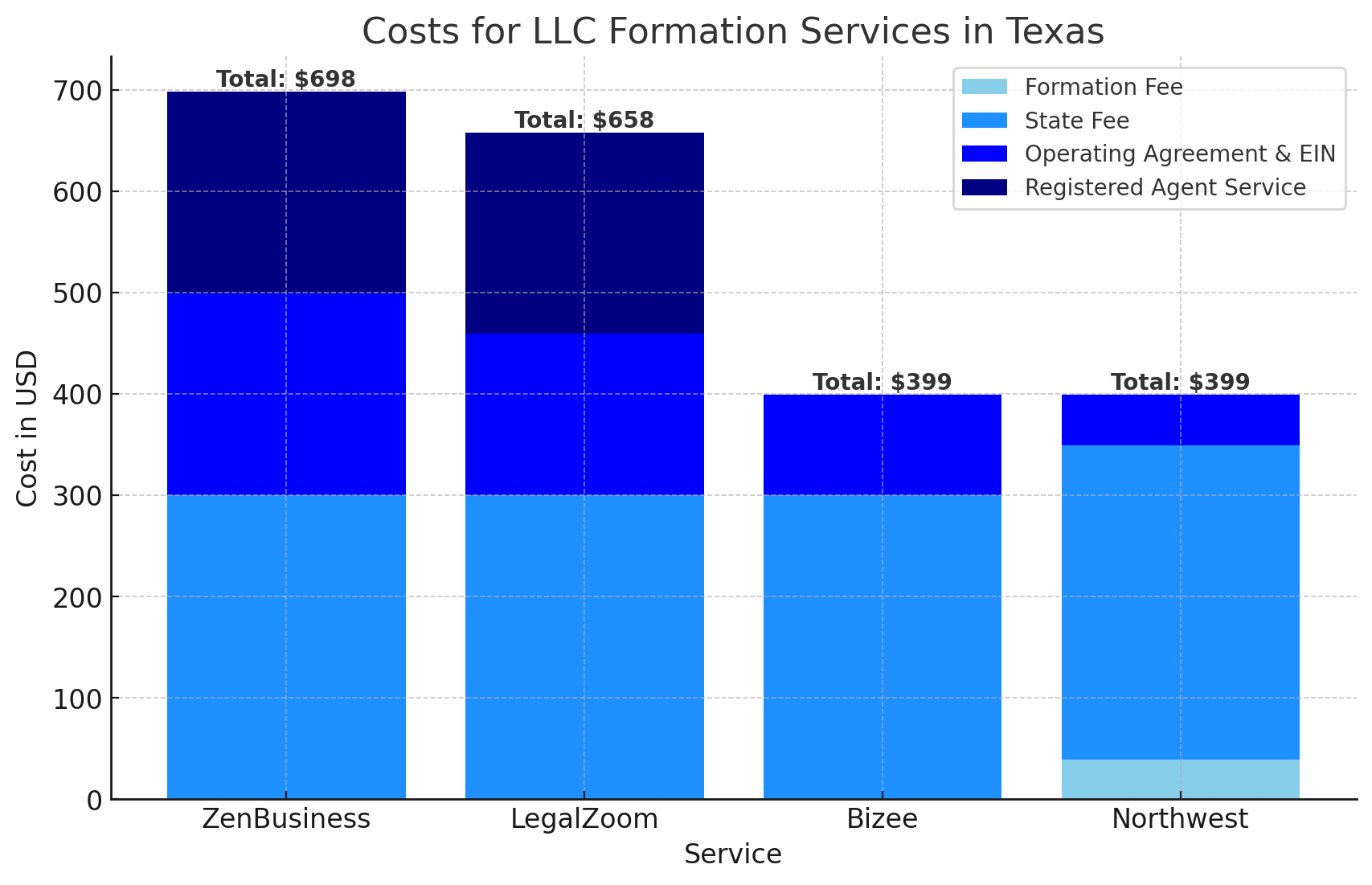
A lawyer can ensure all legal aspects are correctly handled, saving you time and potential future issues. - Utilizing a Formation Service: A cost-effective and efficient option for many. Prominent services include ZenBusiness, LegalZoom, and our recommended choice, Northwest Registered Agent.
Steps to Start an LLC in Texas
1. Choose a Distinctive Name
Your LLC’s name should be unique in Texas and include phrases like “Limited Liability Company” or its abbreviations. To ensure your desired name is available, visit the Texas Comptroller of Public Accounts website and check for name availability. For example, names like "Microsoft" are already in use and cannot be used again.
2. Appoint a Registered Agent
Texas law requires you to designate a registered agent who will handle your LLC's legal documents. You can choose to be your own registered agent or hire a professional service. The registered agent must:
- Be available during normal business hours, Monday to Friday.
- Have a physical address in Texas (PO boxes are not accepted).
- Receive legal notices and official documents.
Using a professional registered agent service, which typically costs between $125 and $200 per year, is often recommended to keep your personal address private and ensure compliance.
3. File the Certificate of Formation
Submit your Certificate of Formation (Form 205) to the Texas Secretary of State and pay the $300 filing fee, plus an additional 2.7% if using a credit card. This form includes essential information about your LLC, such as its name, address, and registered agent details.
4. Obtain an Employer Identification Number (EIN)
An EIN is your business’s Social Security number, necessary for tax and employment purposes. You can obtain your EIN for free directly from the IRS. If you prefer a guided approach, check our step-by-step guide on obtaining an EIN.
5. Draft an Operating Agreement
While not legally required in Texas, an operating agreement is highly recommended. This document outlines how your LLC will operate, including member roles, profit distribution, and management structure.
You can use a free operating agreement template from Northwest Registered Agent.
6. Open a Business Bank Account
Separating your personal and business finances is crucial. Open a business bank account using your EIN and operating agreement. This step ensures your LLC maintains its limited liability protection and simplifies accounting and tax processes.
If you're looking to find the best 1st credit card for your business in 2024, check out our detailed review.
7. File a Beneficial Ownership Information Report
Starting in 2024, Texas requires LLCs to file a Beneficial Ownership Information Report with the Financial Crimes Enforcement Network (FinCEN). This report discloses information about the primary owners of the LLC. You have 90 days after forming your LLC in 2024 to submit this report, and within 30 days in 2025.
8. Maintain Good Standing
To keep your LLC in good standing, you must submit an annual franchise tax report to the Texas Comptroller of Public Accounts. Most businesses with revenue below $2,470,000 will not owe any franchise taxes, but timely filing is essential to maintain compliance.
Forming Your LLC with Northwest Registered Agent
Northwest Registered Agent simplifies the process of LLC formation in Texas. By clicking on the button below, you can use our affiliate link and form your LLC in Texas for only $39, plus state fees. This exclusive offer includes their registered agent service free for the first year, adding extra value and savings for your new venture.
We earn commissions for purchases made through links in this post at no additional cost to you.
Why Choose Northwest Registered Agent?
- Affordable Pricing: Form your LLC for just $39 plus state fees.
- Free Registered Agent Service: Enjoy the first year free when you form your LLC.
- User-Friendly Process: Easily navigate the formation steps with expert support.
- Additional Services: Access to an operating agreement template and other business tools.
Legal Obligations and Compliance in Texas
Compliance with state-specific regulations is vital when starting an LLC in Texas. Ensure your LLC’s name aligns with Texas requirements and maintain an accessible registered agent. Additionally, timely filing of annual franchise tax reports is essential for continued compliance and to keep your LLC in good standing.
Advantages of a Texas LLC
A Texas LLC offers several benefits, including:
- Limited Liability Protection: Protects your personal assets from business debts and liabilities.
- Tax Flexibility: Potential tax benefits and the option to be taxed as an S-Corp.
- Flexible Management Structures: Choose between member-managed and manager-managed structures.
- Business-Friendly Environment: Texas is known for its supportive environment for businesses, fostering growth across diverse sectors.
Common Pitfalls to Avoid
Avoid common errors such as:
- Overlooking Legal Duties: Ensure all legal obligations are met to maintain your LLC’s good standing.
- Mixing Personal and Business Finances: Always keep your personal and business finances separate by using a dedicated business bank account.
- Neglecting Annual Reports: Timely filing of annual franchise tax reports is crucial to avoid penalties and keep your LLC active.
Next Steps After Your LLC Formation
Once your LLC is formed, focus on:
- Crafting a Strong Business Plan: Outline your business goals, strategies, and financial projections.
- Setting Up Robust Accounting Systems: Implement effective accounting practices to manage your finances.
- Marketing Your Business: Develop a marketing strategy to promote your products or services and attract customers.
- Leveraging Business Tools and Services: Utilize tools for business management, such as project management software, CRM systems, and more.
Conclusion
Understanding how to start an LLC in Texas is essential for turning your business vision into reality. Whether you choose to go the DIY route, hire a legal expert, or use a formation service like Northwest Registered Agent, following these steps will help ensure your LLC is set up correctly and efficiently.
With the right foundation, your Texas LLC can thrive in the state’s dynamic and business-friendly environment.
Frequently Asked Questions (FAQs)
Can I be my own registered agent in Texas?
Yes, you can act as your own registered agent in Texas. However, your name and address will be publicly listed, and you must be available during regular business hours to receive any legal documents in person.
Can I change my registered agent after I start an LLC?
Yes. To change your registered agent in Texas, you need to file a Statement of Change of Registered Agent with the Texas Secretary of State and pay the required filing fee. More information can be found on the Texas Secretary of State website.
What’s the difference between a member-managed and manager-managed LLC?
If you go for a member-managed LLC, the members (owners) will handle the day-to-day operations. In a manager-managed LLC, members hire managers to run things. These managers take care of tasks such as hiring and firing employees, managing credit and bank accounts, and signing agreements and contracts.
What should be included in an operating agreement?
A personalized operating agreement addresses both the day-to-day and overarching aspects of your company, encompassing everything from member responsibilities to the dissolution of the business. Here are common topics typically included in operating agreements:
- Initial investments
- Profits, losses, and distributions
- Voting rights, decision-making powers, and management
- Transfer of membership interest
- Dissolving the business
Do I need an EIN for my Texas LLC?
Yes, you need an EIN if your business has employees, is a multi-member LLC, or is taxed as a corporation. Even if your LLC isn't legally required to have an EIN, it's advisable for opening bank accounts, applying for business licenses, and keeping your Social Security Number private during business transactions.